
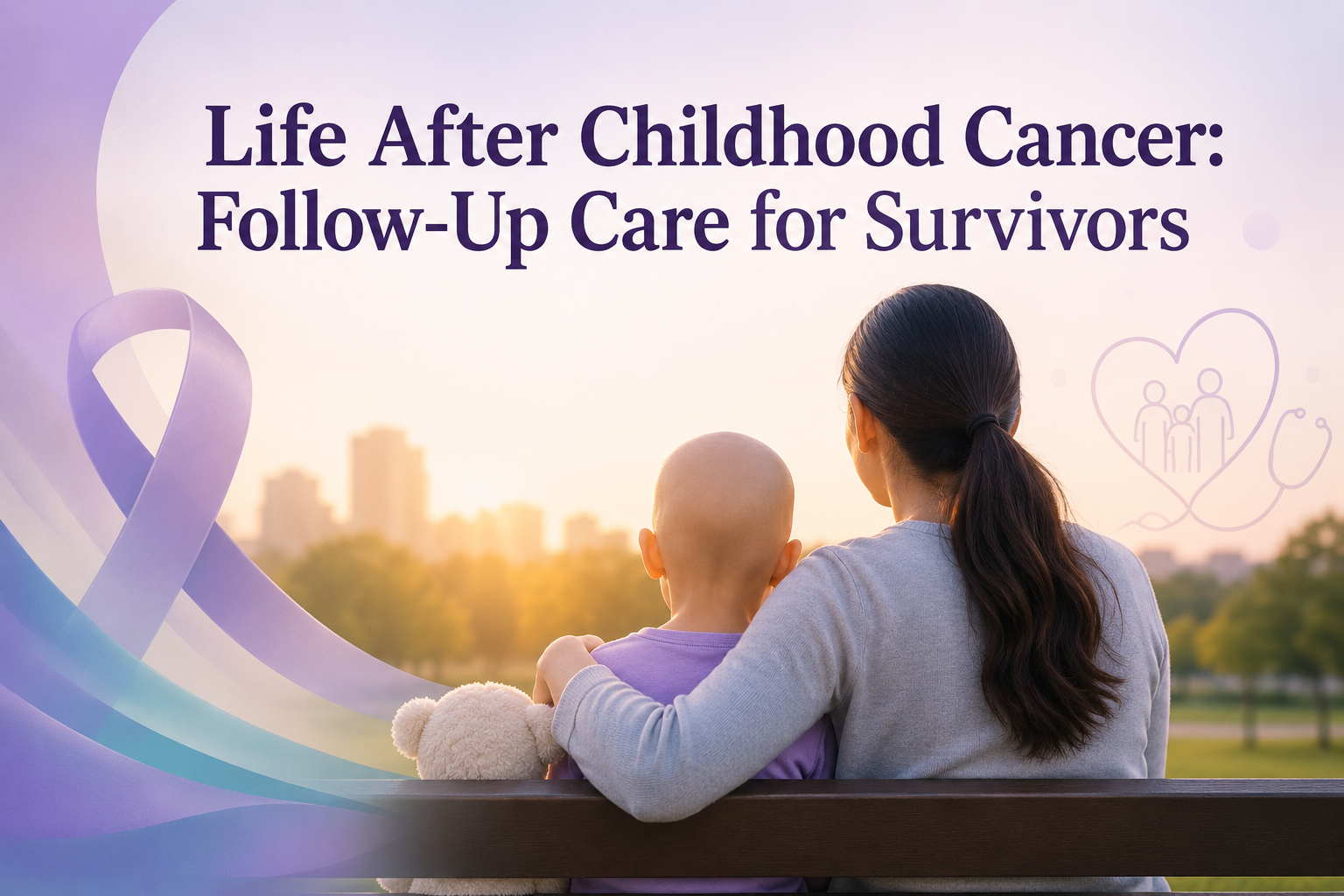
There’s a particular kind of relief that comes with hearing “your child is in remission.” Months, sometimes years, of hospital visits, treatment cycles, and uncertainty finally give way to something that resembles normal life again. But for most parents, this relief comes tangled with a quieter, less-discussed question: what now?
Completing cancer treatment isn’t the finish line it sometimes feels like. It’s the start of a different phase of care — one focused on making sure the cancer hasn’t returned, and on watching for the ways treatment itself may have affected a growing child’s body over the years ahead. This phase is called survivorship care, and it matters just as much as the treatment that came before it.
Why Follow-Up Care Doesn’t End When Treatment Ends
Childhood cancer treatments — chemotherapy, radiation, surgery, or a combination — are powerful enough to treat cancer effectively, but they can also affect healthy, developing tissue along the way. A child’s body is still growing, which means the effects of treatment can show up not immediately, but months or years later, sometimes well into adulthood.
This is why pediatric oncologists don’t simply discharge a child once treatment finishes. Instead, families move into a structured follow-up plan designed to catch two very different things: any sign that the cancer might be returning, and any delayed effect of the treatment itself.
What Does a Typical Follow-Up Schedule Look Like?
The First Two to Five Years
The period immediately after treatment ends carries the highest relative risk of relapse for most childhood cancers, so follow-up visits tend to be the most frequent during this window — often every few months initially, gradually spacing out as time passes without recurrence. These visits usually include a physical examination, blood tests, and depending on the cancer type, periodic imaging such as ultrasounds, X-rays, or scans.
Long-Term, Lifelong Follow-Up
Beyond the initial high-risk years, follow-up doesn’t simply stop. Many survivorship programs recommend at least annual check-ups for life, shifting focus from relapse monitoring toward tracking the late effects of treatment — growth, organ function, fertility, and overall long-term health. As survivors grow into teenagers and adults, this care often transitions from a pediatric oncology team to adult survivorship clinics, ideally with a clear record of the treatment received so future doctors understand what to watch for.
What Doctors Are Watching For: Relapse Monitoring
Relapse — the cancer returning after a period of remission — is naturally one of the biggest fears parents carry into survivorship. Follow-up visits are structured specifically to catch this early, through a combination of:
- Physical examination for any new lumps, swelling, or other changes
- Blood counts and relevant markers, depending on the original cancer type
- Imaging studies at intervals determined by the type and stage of the original cancer
It’s worth knowing that the risk of relapse generally decreases the longer a child remains in remission, which is part of why follow-up visits become less frequent over time rather than staying constant indefinitely.
Late Effects of Childhood Cancer Treatment
This is often the part of survivorship care parents know the least about, simply because it isn’t as urgent-sounding as “watching for relapse.” But late effects are a real and important part of long-term monitoring.
Growth, Fertility and Hormonal Effects
Certain chemotherapy drugs and radiation, particularly when directed near the brain, chest, or abdomen, can affect a child’s growth pattern, puberty timing, thyroid function, or future fertility. Endocrine monitoring — tracking growth curves, hormone levels, and pubertal development — is a standard part of many survivorship plans.
Heart, Lung and Organ Effects
Some chemotherapy agents can affect heart or lung function over time, even when a child shows no symptoms in the short term. Periodic heart function tests (such as an echocardiogram) or lung function assessments may be recommended depending on which drugs and doses were used during treatment.
Cognitive and Learning Effects
Children treated for cancers involving the brain, or who received certain types of chemotherapy or radiation, can sometimes experience effects on memory, attention, or learning pace later on. This is particularly relevant for school-age survivors, and early identification allows schools and families to put the right academic support in place.
Risk of Second Cancers
Certain treatments carry a small increased risk of a second, different cancer developing years later. This is one of the key reasons lifelong follow-up matters, even decades after the original diagnosis, and why survivors are generally advised to maintain regular check-ups well into adulthood.
Supporting Your Child’s Emotional and Social Recovery
Survivorship isn’t only a physical journey. Children who’ve been through cancer treatment often carry the experience with them in less visible ways — anxiety about check-ups, gaps in schooling or friendships, or a sense of being “different” from peers who didn’t go through what they did.
Reintegrating into school, sports, and social life at a comfortable pace, rather than all at once, tends to help. Many survivorship programs also offer access to counselors or psychologists who specifically work with childhood cancer survivors and their families, and it’s worth asking your care team whether this kind of support is available.
Building a Survivorship Care Plan
One of the most useful tools a family can have is a written survivorship care plan — a document summarizing exactly what cancer the child had, what treatment they received (including specific drugs, doses, and any radiation), and a personalized schedule of recommended follow-up tests going forward. This becomes especially valuable as a child grows up and eventually moves between different doctors or healthcare systems, ensuring that important treatment history isn’t lost over time.
A Note From Dr. Vikas Dua
Dr. Vikas Dua, Principal Director & Head – Pediatric Hematology, Oncology & Bone Marrow Transplant at Fortis Memorial Research Institute, Gurugram, notes that the period after treatment ends is one families often aren’t fully prepared for, having focused so intensely on getting through treatment itself. With over 20 years of experience treating children with cancers and blood disorders, his approach to survivorship includes structured, individualized follow-up plans that account for both relapse monitoring and the specific late effects relevant to each child’s treatment history.
Conclusion
Remission is a genuine milestone, but it isn’t the end of the road. Follow-up care after childhood cancer serves two essential purposes: catching relapse early and watching carefully for the ways treatment may affect a child’s growth, organs, and development over the years ahead. A clear, individualized survivorship plan — carried forward as your child grows into adulthood — gives families the structure to move forward with confidence rather than uncertainty.
If your child has recently completed cancer treatment, discussing a personalized long-term follow-up plan with their oncology team is one of the most valuable steps you can take for their continued wellbeing.
Frequently Asked Questions
Q1. How often does a child need check-ups after finishing cancer treatment? Follow-up visits are usually most frequent in the first two to five years after treatment, often every few months initially, gradually spacing out to annual visits as time passes without signs of relapse.
Q2. What tests are typically done during childhood cancer follow-up visits? This depends on the original cancer type but commonly includes physical examination, blood tests, and periodic imaging such as ultrasound, X-ray, or scans, along with tests for specific late effects like heart or hormone function.
Q3. What are “late effects” of childhood cancer treatment? Late effects are delayed impacts of cancer treatment that can appear months or years afterward, potentially affecting growth, fertility, hormone levels, heart or lung function, learning ability, or carrying a small increased risk of a second cancer.
Q4. Does follow-up care continue into adulthood? Yes, for many childhood cancer survivors, follow-up care continues lifelong, often transitioning from a pediatric oncology team to an adult survivorship clinic as the child grows into adulthood.
Q5. What are signs of relapse parents should watch for? New or unexplained lumps, unexplained fatigue, fever, weight loss, or a return of symptoms similar to the original diagnosis should be reported to the treating oncologist promptly, though the specific signs vary by cancer type.
Q6. Can a childhood cancer survivor live a completely normal life? Many childhood cancer survivors go on to lead full, healthy lives, especially with consistent long-term follow-up that catches and manages any late effects early.
Q7. What is a survivorship care plan? It’s a written summary of a child’s cancer diagnosis, the treatment they received, and a personalized schedule of recommended future follow-up tests — a useful document to carry forward as the child grows and potentially changes healthcare providers.
This article is intended for general educational purposes and should not replace personalized medical advice. Follow-up schedules and monitoring needs vary significantly based on the type of cancer and treatment received, and should always be guided by your child’s treating oncology team.
Dr. Vikas Dua Principal Director & Head – Pediatric Hematology, Oncology & Bone Marrow Transplant Fortis Memorial Research Institute, Gurugram
📞 +91-9818265787 / +91-8860760993 📍 Fortis Memorial Research Institute, Sector 44, Opposite HUDA City Centre, Gurugram, Haryana 122002 🌐 www.drvikasdua.com
