
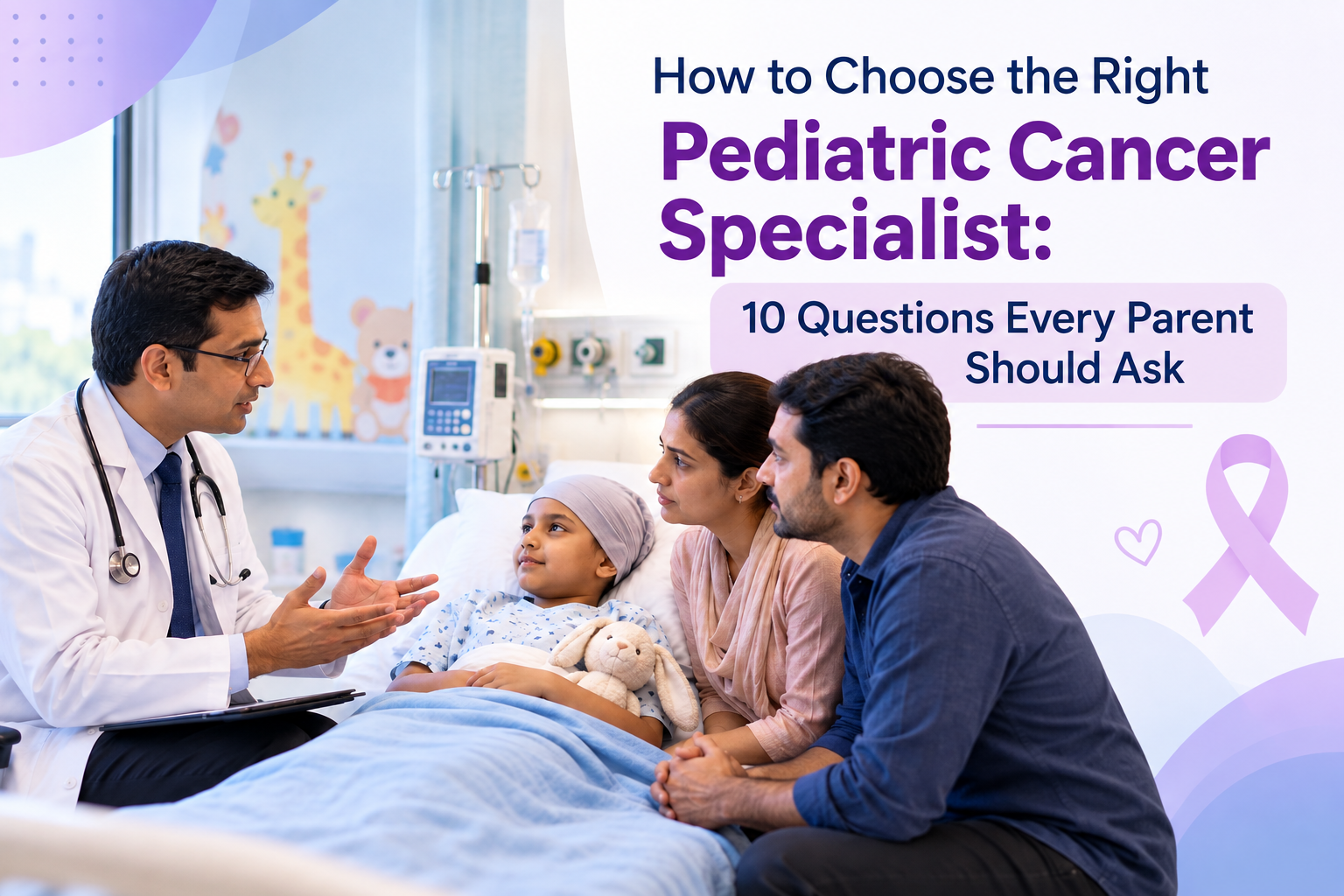
Hearing that your child may have cancer is one of the most difficult experiences a parent can go through. Along with the shock of the diagnosis, families are suddenly faced with unfamiliar medical terms, investigations, treatment choices and decisions that may feel overwhelming.
One of the first decisions is finding the right pediatric cancer specialist.
For parents, this search often starts online with terms such as “pediatric oncologist,” “pediatric cancer specialist,” or “best pediatric oncologist.” But choosing a specialist should involve more than comparing names or reading online reviews.
The right doctor for your child should have appropriate pediatric oncology training, experience with the particular cancer, access to a multidisciplinary team and the ability to explain the treatment plan clearly to the family.
Here are 10 questions that can help parents make a more informed decision.
1. Does the doctor have specialized training in pediatric oncology?
The first thing to look at is the doctor’s training.
Pediatric oncology is different from adult oncology. Children are still growing and developing, and cancer treatment has to take into account not only the disease itself but also the child’s age, development, nutrition, immunity and long-term health.
A pediatric hemato-oncologist is trained to manage cancers and blood disorders specifically in children.
Parents can ask:
- What is your training in pediatric hematology-oncology?
- How long have you worked in pediatric oncology?
- Do you regularly treat children with cancer?
- Does your training include pediatric blood cancers as well as solid tumors?
Qualifications alone do not tell the whole story, but they are a useful starting point when evaluating a specialist.
2. Does the specialist have experience with my child’s particular cancer?
“Childhood cancer” is not one disease.
Leukemia, lymphoma, brain tumors, neuroblastoma, Wilms tumor, retinoblastoma, bone tumors and other childhood cancers can behave differently and require different approaches to diagnosis and treatment.
That is why it is worth asking about experience with the specific diagnosis.
For example, parents can ask:
“How often do you treat children with this type of cancer?”
This is more useful than simply asking how many years the doctor has been practicing.
A specialist may have extensive experience in pediatric oncology, but the relevance of that experience to your child’s particular diagnosis is also important.
Dr. Vikas Dua’s official profile lists pediatric cancer, leukemia treatment, thalassemia, aplastic anemia and sickle cell anemia among his areas of specialization.
3. How will the diagnosis be confirmed?
Before discussing treatment, parents should understand how the diagnosis was established.
Depending on the suspected cancer, investigations may include blood tests, imaging, bone marrow examination, biopsy, flow cytometry, cytogenetic testing or molecular and genetic studies.
Not every child will need every test.
Ask the specialist:
- What tests are needed to confirm the diagnosis?
- Are additional tests required to determine the exact subtype?
- Will the test results affect treatment?
- How long will it take to receive the important results?
This is particularly important in childhood cancers where the exact type and biological characteristics of the disease may influence treatment planning.
Parents should not hesitate to ask the doctor to explain a report in simple language.
4. What treatment options are available?
Once the diagnosis is confirmed, the next question is usually: What happens now?
Treatment for childhood cancer can vary considerably depending on the type and extent of disease.
Depending on the diagnosis, treatment may involve chemotherapy, surgery, radiation therapy, immunotherapy, targeted therapy, stem cell transplantation or a combination of treatments.
The important point is that there is no single treatment plan that applies to every child.
Ask:
“What treatment is being recommended for my child, and why?”
Also ask whether there are alternative approaches and what the purpose of each part of the treatment is.
A good consultation should help parents understand the reasoning behind the treatment plan rather than simply giving them a list of medicines and procedures.
5. Will my child need a bone marrow transplant?
This is a question many parents understandably worry about.
The answer depends entirely on the child’s diagnosis and individual circumstances.
Bone marrow or stem cell transplantation can be an important treatment option for some children with leukemia and certain other blood disorders. However, it is not required for every child with cancer.
Parents should ask:
- Is transplant being considered for my child?
- If yes, why?
- At what point would it be recommended?
- What donor options would be available?
- Are there other treatment approaches?
If BMT becomes relevant, families may also benefit from understanding the different stages of the process. Dr. Dua’s website has a dedicated resource on bone marrow transplant in children, including the procedure and recovery.
6. Does the specialist work with a multidisciplinary pediatric cancer team?
Childhood cancer care often involves more than one medical specialty.
Depending on the diagnosis, a child’s treatment may involve pediatric surgeons, radiation oncologists, pathologists, radiologists, intensive care specialists, infectious disease physicians, nurses, nutrition professionals, psychologists and rehabilitation teams.
This is why parents should ask how the different members of the team work together.
You can ask:
“Who will be involved in my child’s care apart from the oncologist?”
and
“How are treatment decisions discussed between the different specialists?”
A coordinated team can help ensure that different aspects of a child’s care are considered together.
7. How does the specialist explain risks and side effects?
Parents understandably want to hear that treatment will work. But a responsible consultation should also include an honest discussion of possible side effects and risks.
Cancer treatments can affect children differently depending on their age, diagnosis, treatment protocol and overall health.
Parents should ask:
- What side effects are common?
- Which symptoms should concern us?
- What should we do if our child develops fever?
- Which side effects require an urgent hospital visit?
- How will side effects be managed?
The purpose of these questions is not to create more fear. It is to make sure parents know what to expect and when to seek help.
8. What should we expect during treatment?
Cancer treatment can affect many parts of family life.
Parents may want to know whether their child will need to stay in hospital, how frequently appointments will be required, whether school attendance will be possible and how treatment may affect everyday activities.
Ask the specialist to explain the likely treatment timeline.
For example:
- How long is the initial treatment likely to last?
- Will my child need to stay in the hospital?
- How frequently will treatment be given?
- Can my child attend school during treatment?
- What precautions should we take at home?
- How will nutrition and growth be monitored?
The exact answers will depend on the child’s diagnosis and treatment plan.
9. Does the doctor discuss life after cancer treatment?
For children, finishing cancer treatment is an important milestone, but medical follow-up does not necessarily end there.
Some childhood cancer treatments can have effects that appear months or years later. Depending on the treatment received, doctors may monitor areas such as growth, development, heart health, hormone function, fertility, learning and psychological wellbeing.
This is often referred to as survivorship or long-term follow-up care.
Parents should ask:
“What follow-up will my child need after treatment is completed?”
Dr. Dua’s website has a dedicated guide on life after childhood cancer and long-term follow-up care, which discusses the importance of monitoring children after treatment and potential late effects.
Thinking about long-term health from the beginning can help families understand that successful pediatric cancer care involves more than treating the cancer itself.
10. Do you feel comfortable asking questions and discussing concerns?
This final question is about the relationship between the family and the medical team.
Parents may have questions about treatment, prognosis, costs, school, nutrition, infections, second opinions or what happens if treatment does not work as expected.
You should feel able to ask these questions.
It is also perfectly reasonable to say:
“I don’t understand this. Could you explain it again?”
Medical information can be complicated, especially when you are hearing it at a stressful time.
A specialist who communicates clearly can help parents make decisions with a better understanding of what is happening.
What Should Parents Take to the First Pediatric Oncology Appointment?
If possible, take all previous medical records to the consultation.
These may include:
- Blood test reports
- Imaging reports and scans
- Bone marrow examination reports
- Biopsy reports
- Flow cytometry results
- Genetic or molecular test reports
- Previous prescriptions
- Hospital discharge summaries
- Details of previous treatments
It can also help to make a short timeline of the child’s symptoms and previous consultations.
Write down your questions before the appointment. In an emotional situation, it is easy to remember the questions later but forget to ask them during the consultation.
Should Parents Get a Second Opinion?
A second opinion can be useful when a diagnosis is complex or when a major treatment decision is being considered.
Getting another medical opinion does not necessarily mean that the first doctor was wrong.
It can help parents:
- Confirm the diagnosis
- Understand treatment options
- Clarify whether a transplant is recommended
- Understand potential risks and benefits
- Feel more confident about the treatment plan
Parents should ideally take the complete medical records and investigation reports when seeking another opinion. This allows the second specialist to review the actual clinical information rather than relying only on a verbal description.
What Makes a Pediatric Cancer Specialist Different From an Adult Oncologist?
This is an important distinction for parents.
Children’s cancers are not simply smaller versions of adult cancers. The types of cancer seen in children, their biology, treatment protocols and the way children respond to treatment can differ from adult cancers.
Pediatric oncology also involves issues that are particularly important during childhood, including growth, development, nutrition, schooling, emotional wellbeing and long-term health.
For this reason, children diagnosed with cancer should generally be evaluated by a healthcare team experienced in pediatric oncology.
Why Parents May Consider Dr. Vikas Dua
Dr. Vikas Dua is a Pediatric Hemato-Oncologist and Bone Marrow Transplant Specialist practicing in the Delhi-NCR region.
According to his official profile, he has an MBBS and MD in Pediatrics, followed by an FNB in Pediatric Hematology-Oncology from Sir Ganga Ram Hospital, New Delhi. He subsequently completed a fellowship in Pediatric Bone Marrow Transplant at National University Hospital (NUH), Singapore, and an outreach program in Pediatric BMT at St. Jude Children’s Research Hospital, USA. His website lists more than 20 years of experience.
His current role is listed as Principal Director and Head of Pediatric Hematology, Oncology and Bone Marrow Transplant at Fortis Memorial Research Institute, Gurugram.
For families looking for a pediatric cancer specialist, these qualifications provide useful background when deciding whether his experience is appropriate for their child’s particular diagnosis.
Frequently Asked Questions
How do I choose a pediatric cancer specialist?
Look at the doctor’s pediatric oncology training, experience with your child’s specific cancer, access to a multidisciplinary team, hospital facilities, communication and long-term follow-up arrangements.
What is the difference between a pediatric oncologist and a pediatric hemato-oncologist?
A pediatric hemato-oncologist specializes in cancers as well as blood disorders in children. The exact scope of practice can vary between specialists, so parents should review the doctor’s specific training and areas of expertise.
What are the most common childhood cancers?
Childhood cancers include leukemia, lymphoma, brain and central nervous system tumors, neuroblastoma, Wilms tumor, retinoblastoma, bone cancers and several other less common cancers. The type and frequency vary by age and population. Dr. Dua’s childhood cancer FAQ provides an overview of several common childhood cancers.
Does every child with cancer need chemotherapy?
No. Treatment depends on the type of cancer and its individual characteristics. Some children may receive chemotherapy, while others may require surgery, radiation, immunotherapy, targeted therapy, stem cell transplantation or a combination of treatments.
Does every child with leukemia need a bone marrow transplant?
No. The need for transplant depends on the type of leukemia, disease characteristics, response to treatment and other individual factors. The treating pediatric oncology team should determine whether BMT is appropriate.
Can childhood cancer be cured?
Many childhood cancers can be treated successfully, but outcomes vary substantially according to the type of cancer, disease characteristics, treatment response and other factors. A child’s own oncology team is best placed to discuss prognosis.
How important is follow-up after childhood cancer treatment?
Long-term follow-up is important because doctors may need to monitor for recurrence as well as possible late effects of treatment. The follow-up schedule depends on the type of cancer and treatment received.
Final Thoughts
Choosing a pediatric cancer specialist is a decision that deserves time and careful consideration.
Instead of focusing only on who appears first in an online search, look at the specialist’s pediatric oncology training, experience with the specific diagnosis, the supporting medical team and the way treatment options are explained.
Ask questions. Take another opinion when appropriate. And make sure you understand why a particular treatment has been recommended for your child.
When parents have clear information, they are in a much better position to participate in their child’s care and make decisions with confidence.
