
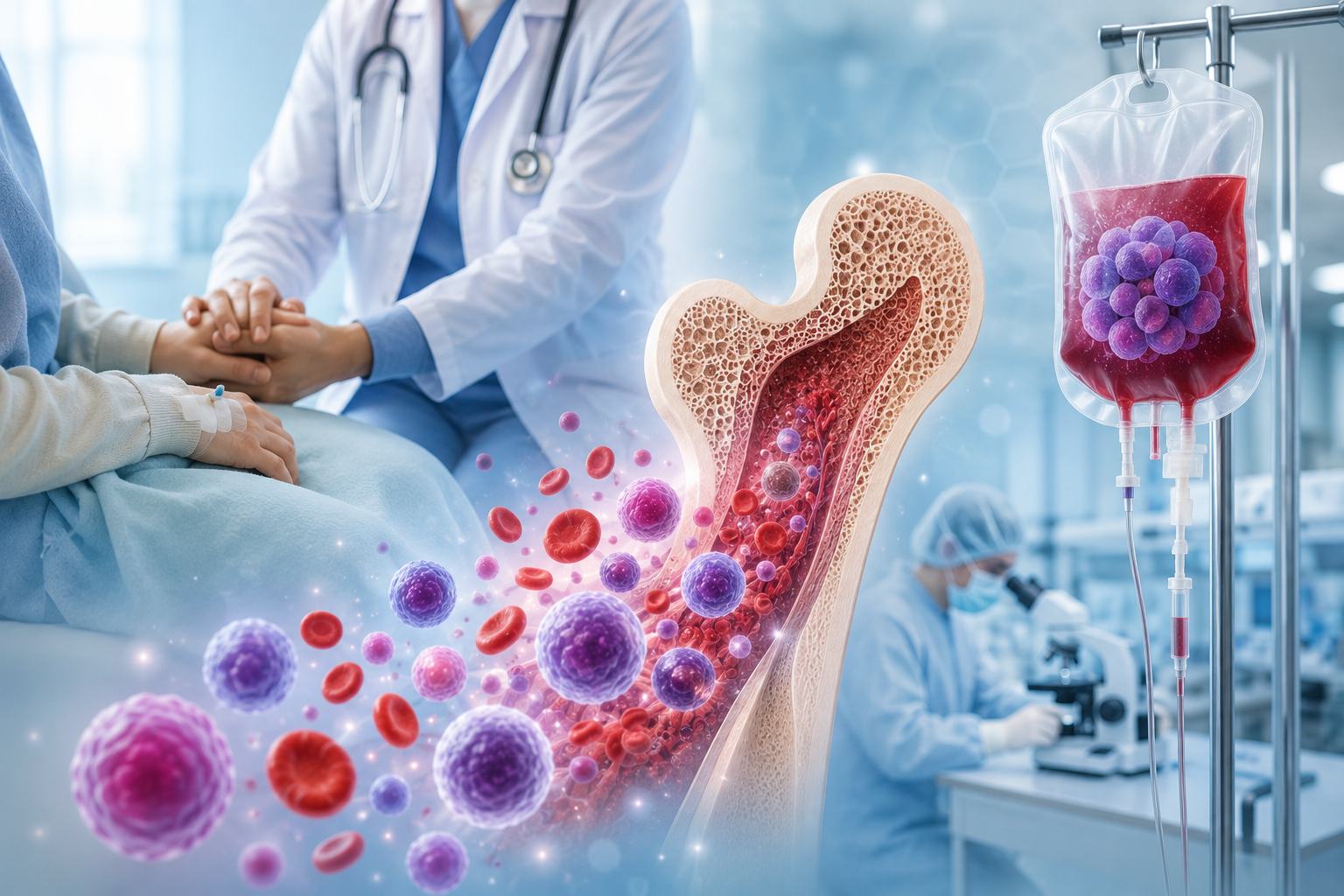
A Bone Marrow Transplant (BMT), also known as a Stem Cell Transplant, is one of the most advanced treatments available for several blood cancers, blood disorders, and immune system diseases. For many patients suffering from leukemia, lymphoma, aplastic anemia, thalassemia, sickle cell disease, and other serious conditions, a Bone Marrow Transplant can offer the possibility of long-term remission or even a cure.
However, undergoing a Bone Marrow Transplant is a major medical decision that requires proper understanding, expert guidance, and specialized care. Patients and families often have many questions about the transplant process, donor matching, success rates, risks, recovery, and long-term outcomes.
This comprehensive guide explains everything you need to know before treatment and why consulting an experienced specialist like Dr. Vikas Dua, one of the leading Bone Marrow Transplant specialists in Delhi, India, is crucial for achieving the best possible outcomes.
What is Bone Marrow Transplant (BMT)?
Bone marrow is the soft tissue inside bones that produces blood-forming stem cells. These stem cells develop into:
- Red blood cells that carry oxygen
- White blood cells that fight infection
- Platelets that help blood clot
When the bone marrow becomes damaged due to cancer, genetic disorders, or other diseases, it may stop producing healthy blood cells.
A Bone Marrow Transplant replaces unhealthy stem cells with healthy stem cells, allowing the body to rebuild a functioning blood and immune system.
Who Needs a Bone Marrow Transplant?
A Bone Marrow Transplant may be recommended for patients with:
Blood Cancers
- Acute Lymphoblastic Leukemia (ALL)
- Acute Myeloid Leukemia (AML)
- Chronic Myeloid Leukemia (CML)
- Hodgkin Lymphoma
- Non-Hodgkin Lymphoma
- Multiple Myeloma
Blood Disorders
- Aplastic Anemia
- Thalassemia Major
- Sickle Cell Disease
- Myelodysplastic Syndromes (MDS)
Immune and Genetic Disorders
- Severe Combined Immunodeficiency (SCID)
- Fanconi Anemia
- Wiskott-Aldrich Syndrome
- Other inherited blood disorders
The decision to perform a transplant depends on the patient’s age, diagnosis, disease stage, overall health, and response to previous treatments.
Types of Bone Marrow Transplant
1. Autologous Bone Marrow Transplant
In this type, a patient’s own healthy stem cells are collected and stored before high-dose chemotherapy.
After treatment, the stored stem cells are returned to the body to restore bone marrow function.
Commonly used for:
- Multiple Myeloma
- Certain Lymphomas
2. Allogeneic Bone Marrow Transplant
Stem cells are obtained from a donor whose tissue type closely matches the patient.
Donors may include:
- Brothers or sisters
- Parents
- Children
- Unrelated matched donors
This is the most common transplant for leukemia, aplastic anemia, and inherited blood disorders.
3. Haploidentical Bone Marrow Transplant
A haploidentical transplant uses a partially matched family donor.
This approach has significantly expanded transplant options for patients who do not have a fully matched donor available.
Dr. Vikas Dua has extensive experience in performing advanced haploidentical transplants.
How is a Donor Selected?
Donor selection is based on Human Leukocyte Antigen (HLA) matching.
Potential donors undergo:
- Blood testing
- HLA typing
- Medical evaluation
- Infectious disease screening
A closer donor match generally reduces the risk of complications and improves transplant success.
What Happens Before the Transplant?
Before transplantation, patients undergo a detailed evaluation including:
- Blood tests
- Bone marrow examination
- Imaging studies
- Cardiac evaluation
- Lung function tests
- Infection screening
The transplant team also assesses the patient’s overall fitness for the procedure.
Conditioning Therapy
Before receiving stem cells, patients undergo conditioning therapy which may include:
- High-dose chemotherapy
- Radiation therapy in selected cases
- Immunosuppressive medications
The purpose is to destroy diseased cells and prepare the body to accept new stem cells.
What Happens During the Bone Marrow Transplant?
Many patients are surprised to learn that Bone Marrow Transplant is not a surgical procedure.
Healthy stem cells are infused through a vein, similar to a blood transfusion.
The transplanted stem cells travel to the bone marrow and begin producing new blood cells over time.
The infusion itself is usually painless.
Recovery After Bone Marrow Transplant
Recovery is one of the most important phases of treatment.
After transplantation:
- Blood counts are monitored daily
- Patients receive infection prevention medications
- Nutritional support is provided
- Immune recovery is closely tracked
Engraftment
Engraftment occurs when transplanted stem cells begin producing healthy blood cells.
This usually takes:
- 10–30 days for most patients
Full Recovery
Complete immune system recovery may take:
- Several months to one year
Recovery varies depending on:
- Type of transplant
- Age
- Underlying disease
- Presence of complications
What Are the Risks of Bone Marrow Transplant?
Like any major medical procedure, Bone Marrow Transplant carries certain risks.
Possible complications include:
- Infections
- Bleeding
- Organ toxicity
- Graft failure
- Graft-versus-host disease (GVHD)
- Delayed immune recovery
However, modern transplant protocols and experienced transplant teams have significantly improved safety and outcomes.
What is Graft-Versus-Host Disease (GVHD)?
GVHD occurs when donor immune cells attack healthy tissues in the recipient’s body.
It can affect:
- Skin
- Liver
- Gastrointestinal tract
- Eyes
- Lungs
Specialized monitoring and preventive medications help reduce this risk.
What is the Success Rate of Bone Marrow Transplant?
Success rates depend on several factors:
- Disease type
- Disease stage
- Age of the patient
- Donor match quality
- Overall health condition
- Experience of the transplant team
Patients treated early and under expert care often achieve excellent outcomes.
Consulting a specialist such as Dr. Vikas Dua helps ensure that patients receive personalized treatment planning and evidence-based care.
Why Choose Dr. Vikas Dua for Bone Marrow Transplant Treatment?
Choosing the right transplant specialist is one of the most important decisions in the treatment journey.
Dr. Vikas Dua is widely recognized as one of the leading Bone Marrow Transplant specialists in Delhi and India due to his expertise in:
- Pediatric Bone Marrow Transplant
- Adult Stem Cell Transplant
- Haploidentical Transplant
- Leukemia Treatment
- Thalassemia Cure through BMT
- Aplastic Anemia Management
- Complex Blood Disorders
His patient-focused approach, advanced transplant expertise, and commitment to international treatment standards have helped countless patients receive life-saving care.
Book an Appointment with Dr. Vikas Dua
If you or a loved one has been advised to undergo a Bone Marrow Transplant, early consultation with a specialist can help you understand treatment options and make informed decisions.
Appointment Numbers
📞 9818265787
📞 8860760993
Website
Conclusion
Bone Marrow Transplant is a highly specialized treatment that has transformed the lives of patients with blood cancers, blood disorders, and immune deficiencies. Understanding the transplant process, donor selection, recovery, and potential risks can help patients approach treatment with greater confidence.
With the guidance of an experienced specialist like Dr. Vikas Dua, patients gain access to advanced transplant techniques, comprehensive care, and personalized treatment plans designed to achieve the best possible outcomes.
Frequently Asked Questions (FAQs)
1. What is a Bone Marrow Transplant?
Bone Marrow Transplant is a procedure that replaces damaged or diseased bone marrow with healthy stem cells to restore normal blood cell production.
2. Is Bone Marrow Transplant painful?
The stem cell infusion itself is generally painless. However, patients may experience side effects from chemotherapy and conditioning treatment.
3. How long does a Bone Marrow Transplant take?
The stem cell infusion usually takes a few hours, but the entire treatment and recovery process may take several weeks to months.
4. Can thalassemia be cured through Bone Marrow Transplant?
Yes. Bone Marrow Transplant is currently the only established curative treatment for many patients with thalassemia major.
5. What is a haploidentical transplant?
A haploidentical transplant uses a partially matched family donor when a fully matched donor is unavailable.
6. How long does recovery take after Bone Marrow Transplant?
Initial recovery usually takes several weeks, while full immune recovery may take several months to one year.
7. What is the success rate of Bone Marrow Transplant?
Success rates vary depending on the disease, donor match, patient age, and treatment center expertise.
8. Why should I consult Dr. Vikas Dua for BMT treatment?
Dr. Vikas Dua is among India’s leading Bone Marrow Transplant specialists, with expertise in pediatric and adult transplants, haploidentical transplantation, leukemia treatment, and inherited blood disorders.
9. Can adults undergo Bone Marrow Transplant?
Yes. Both children and adults can benefit from Bone Marrow Transplant depending on their diagnosis and overall health.
10. How can I book an appointment with Dr. Vikas Dua?
You can call 9818265787 or 8860760993 or visit https://drvikasdua.com/ to schedule a consultation.
