
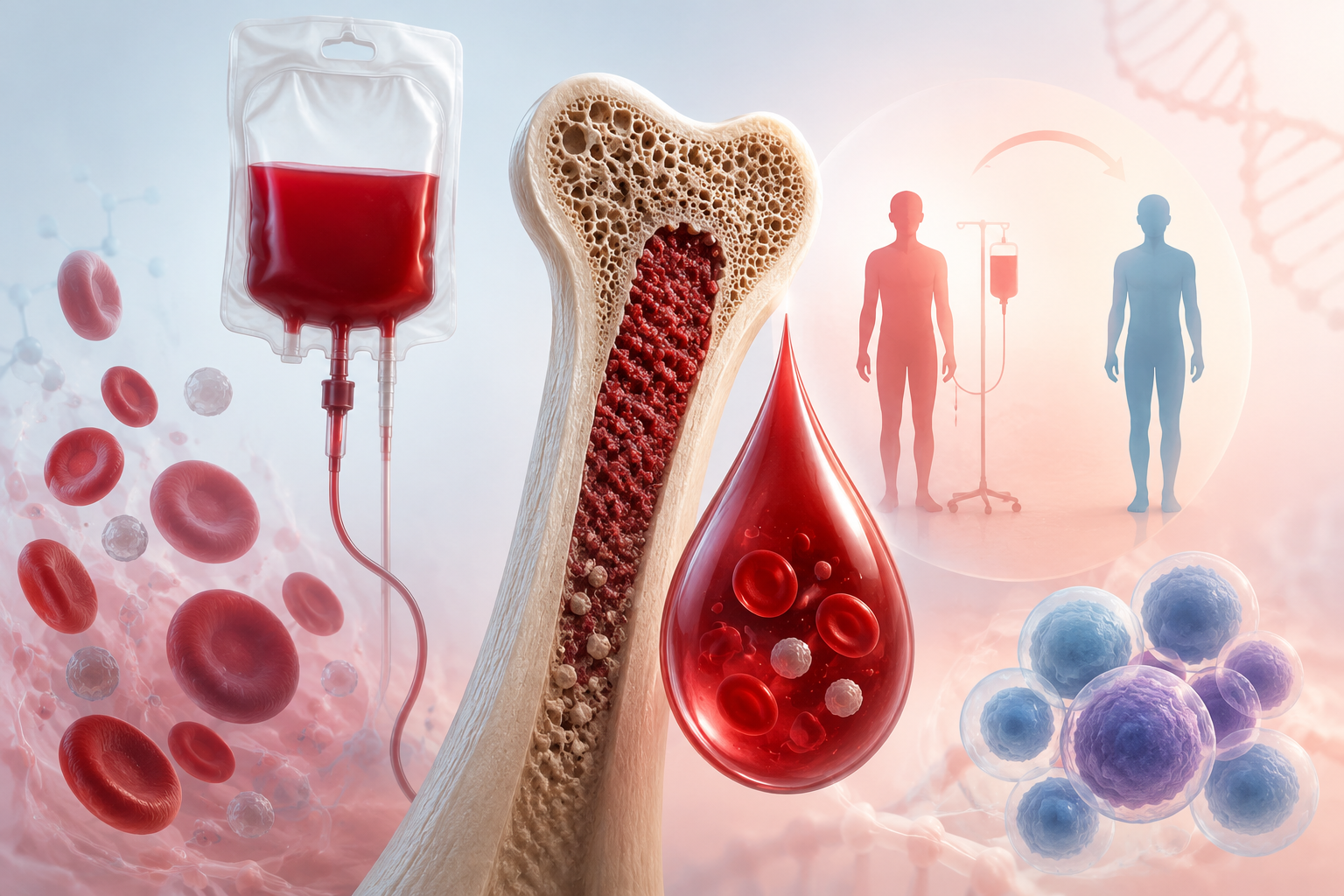
When parents hear that their child has thalassemia and that a Bone Marrow Transplant (BMT) may be one of the treatment options, the first few days are often filled with fear, confusion, and countless questions. One of the questions I hear almost every week is:
“Doctor, will my child need blood transfusions forever, or is Bone Marrow Transplant the only permanent cure?”
It is a question every parent deserves an honest answer to.
Over the past few decades, the management of thalassemia has improved remarkably. Regular blood transfusions, iron chelation therapy, and advances in supportive care have helped children live longer and healthier lives than ever before.
However, there is an important difference between managing thalassemia and curing thalassemia.
For eligible children with transfusion-dependent thalassemia, Bone Marrow Transplant (BMT) remains the most established curative treatment available today. That said, not every child requires a transplant immediately, and not every child is the right candidate. The decision depends on several factors, including the child’s age, overall health, donor availability, and detailed medical evaluation.
As a Pediatric Blood Cancer Specialist and Bone Marrow Transplant doctor, one of my responsibilities is helping families understand not only what treatment is available, but also when it should be considered.
Understanding Thalassemia
Thalassemia is an inherited blood disorder in which the body cannot produce normal haemoglobin effectively. Haemoglobin is the protein inside red blood cells that carries oxygen throughout the body.
Children with Thalassemia Major or severe transfusion-dependent thalassemia usually begin showing symptoms during infancy.
These may include:
- Severe anaemia
- Poor weight gain
- Delayed growth
- Fatigue
- Pale appearance
- Enlarged spleen
- Frequent need for blood transfusions
Without appropriate treatment, complications can affect multiple organs over time.
Blood Transfusions Help—But They Do Not Cure the Disease
One of the biggest misconceptions I encounter is that regular blood transfusions are a cure.
They are not.
Blood transfusions replace healthy red blood cells that the child’s body cannot produce adequately.
While transfusions improve haemoglobin levels and allow children to grow and develop, they do not correct the underlying genetic condition.
Children who depend on transfusions often require them every three to four weeks.
Along with transfusions comes another important challenge—iron overload.
Because the human body cannot naturally eliminate excess iron received through repeated transfusions, iron gradually accumulates in organs such as the liver, heart, and endocrine glands.
That is why iron chelation therapy becomes an essential part of long-term care.
So, Is Bone Marrow Transplant the Only Curative Treatment?
At present, Bone Marrow Transplant (also called Hematopoietic Stem Cell Transplant) remains the most widely accepted curative treatment for transfusion-dependent thalassemia.
The principle is straightforward.
The child’s diseased bone marrow is replaced with healthy blood-forming stem cells from a suitable donor.
Once the donor stem cells successfully establish themselves in the recipient’s bone marrow, they begin producing healthy red blood cells capable of making normal haemoglobin.
If the transplant is successful, many children become free from lifelong blood transfusions.
This is why Bone Marrow Transplant is considered a potentially curative treatment rather than simply supportive care.
Does Every Child With Thalassemia Need a Bone Marrow Transplant?
No.
This is an important point I discuss with every family.
Not every child is an immediate candidate for transplantation.
Before recommending a transplant, several factors need careful evaluation, including:
- Type and severity of thalassemia
- Age of the child
- Overall health
- Organ function
- Iron overload status
- Frequency of blood transfusions
- Availability of a suitable donor
- Previous infections
- Family preferences
Every child is unique.
Treatment decisions should never be based on a diagnosis alone.
Why Earlier Evaluation Often Matters
One observation I have made over the years is that many families wait until complications begin before considering transplantation.
In reality, earlier referral to a Bone Marrow Transplant specialist often allows more treatment options.
Children who undergo transplant before developing significant liver damage, severe iron overload, or other major complications generally have better overall outcomes than those referred much later.
This does not mean every child should immediately undergo transplantation.
It simply means that discussing transplant early allows families to understand the options available and make informed decisions.
Finding the Right Donor
Another common question parents ask is:
“Does my child need a sibling donor?”
A matched sibling donor has traditionally offered excellent outcomes.
However, transplantation has advanced considerably over the past decade.
Today, depending on the child’s condition and transplant centre expertise, several donor options may be considered, including:
- Matched sibling donor
- Matched unrelated donor
- Haploidentical (half-matched) family donor
- Other donor sources where appropriate
The choice depends entirely on the child’s medical condition and donor availability.
This is why donor evaluation forms an important part of the transplant planning process.
What Happens Before a Bone Marrow Transplant?
Many parents imagine that transplantation begins on the day of admission.
In reality, preparation starts much earlier.
The evaluation usually includes:
- Detailed medical assessment
- Blood investigations
- Cardiac evaluation
- Liver function assessment
- Infection screening
- Donor testing
- Imaging studies where required
- Counselling regarding the transplant journey
Equally important is helping families understand the expected course of treatment, possible complications, hospital stay, and follow-up requirements.
A well-informed family is better prepared for the journey ahead.
Is Bone Marrow Transplant Safe?
Every medical procedure carries potential risks, and Bone Marrow Transplant is no exception.
That is why patient selection, donor selection, infection prevention, supportive care, and long-term monitoring are critical.
Advances in transplant medicine have significantly improved outcomes over the years, particularly in experienced transplant centres with dedicated multidisciplinary teams.
Families should have an open discussion with their treating physician regarding expected benefits, possible complications, and individual suitability.
What About Gene Therapy?
Many parents ask about gene therapy after reading online articles.
Gene therapy is an exciting area of medical research and has shown promising results in selected patients.
However, access remains limited in many parts of the world, treatment costs are substantial, and long-term data continue to evolve.
For most children today, Bone Marrow Transplant remains the most established and widely available curative option when appropriate.
As medical science advances, treatment recommendations may continue to evolve.
Life After Bone Marrow Transplant
One of the happiest moments for any transplant physician is seeing a child return for follow-up without needing regular blood transfusions.
After successful transplantation and recovery, many children are able to:
- Attend school regularly
- Participate in sports
- Grow normally
- Reduce hospital visits
- Enjoy a better quality of life
Recovery does not end with discharge from the hospital.
Regular follow-up remains essential to monitor blood counts, immune recovery, nutrition, growth, vaccinations, and overall health.
The transplant is an important milestone—but long-term care continues.
The Importance of Individualised Care
No two children with thalassemia have exactly the same journey.
Some require immediate transplant evaluation.
Others may continue transfusion-based management for a period before transplantation becomes appropriate.
Good medical care is not about recommending the same treatment for everyone.
It is about choosing the right treatment at the right time for the right child.
That decision requires experience, careful evaluation, and open communication with the family.
A Conversation I Have With Parents Every Week
One sentence I often hear is:
“Doctor, we wish we had understood these options earlier.”
Parents naturally want to make the best possible decision for their child.
The more they understand the disease and available treatment options, the more confident they feel during this journey.
As physicians, our responsibility is not only to perform successful transplants but also to guide families with clarity, honesty, and compassion.
When Should You Meet a Bone Marrow Transplant Specialist?
If your child has:
- Transfusion-dependent thalassemia
- Increasing transfusion requirements
- Iron overload despite treatment
- Questions regarding donor availability
- Concerns about long-term management
- Newly diagnosed thalassemia major
It is worthwhile to consult a transplant specialist early—even if transplantation is not planned immediately.
Early counselling allows families to understand all available options and plan appropriately.
Consult Dr. Vikas Dua
If your child has thalassemia, leukemia, aplastic anaemia, immune deficiency, or another serious blood disorder, consult Dr. Vikas Dua, one of the Best BMT Specialists in Delhi, recognized as one of the Best Bone Marrow Transplant Doctors in India and an experienced Pediatric Blood Cancer Specialist.
Every child deserves an individualized treatment plan based on accurate diagnosis, evidence-based medicine, and compassionate care. Whether the goal is long-term transfusion management or evaluating the suitability for a Bone Marrow Transplant, expert guidance can make a meaningful difference in outcomes.
